
How to Free Up Android Terabox-Storage Without Deleting Your Favorite Videos
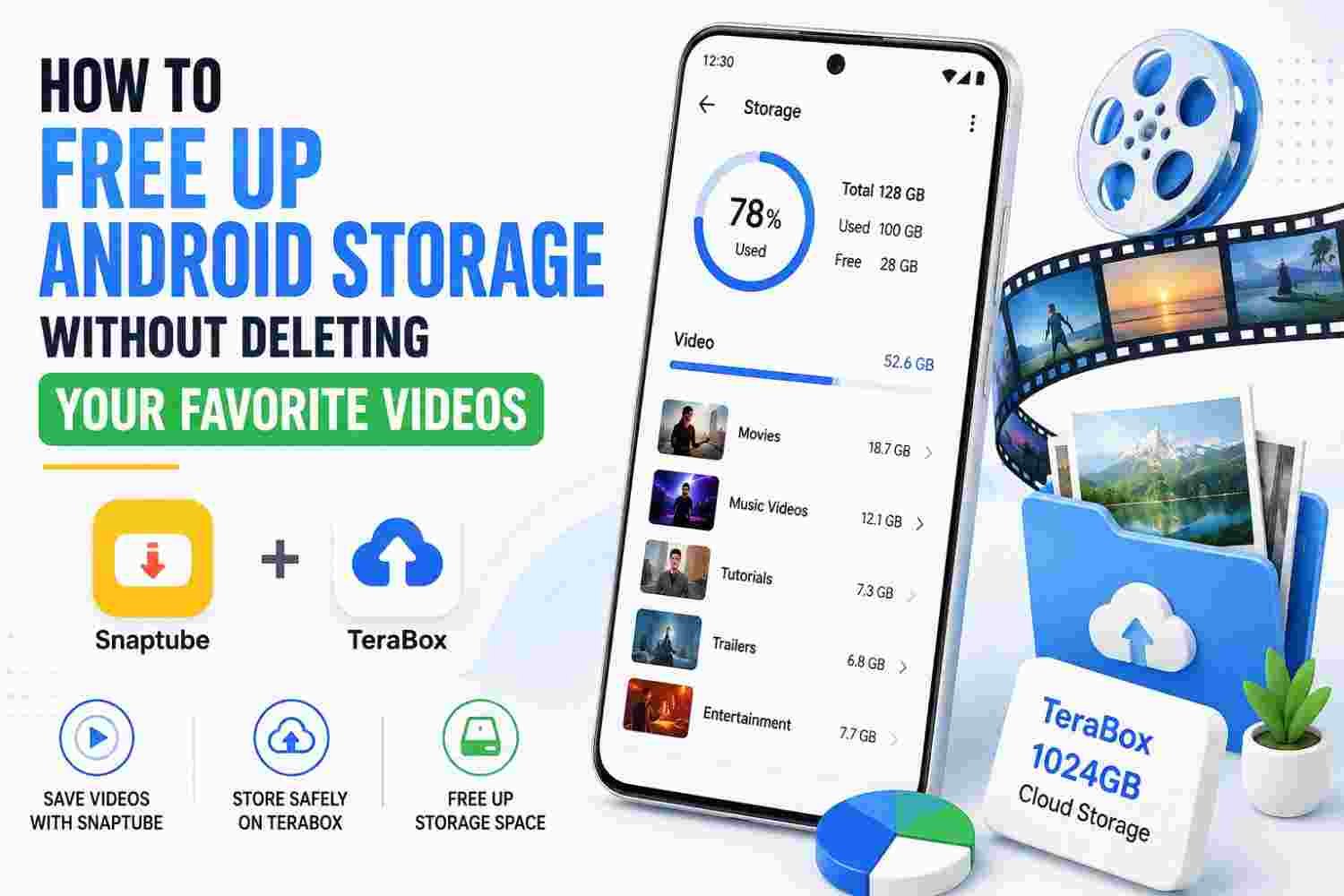
Running out of storage on Android can become annoying, at the possible time. You may have plenty of videos you still want to watch clips you don’t want to lose and useful downloads that you may need later.. When your phone starts showing a “Storage Almost Full” warning deleting everything isn’t the only answer.
A better approach is to manage your existing files carefully.
You can identify videos remove unnecessary copies choose smaller download qualities move older content to cloud storage and clean up files that are no longer useful. With a simple changes it is possible to recover a good amount of storage while keeping the videos you actually care about.
This guide explains ways to free up Android storage without permanently deleting your favorite videos.
Why Do Videos Take Up Much Terabox-Storage?
Videos are, among the files that most people store on a smartphone. A short clip recorded in quality might use only a small amount of space while HD, Full HD or 4K videos can become many times larger.
Several things can gradually fill your phones storage:
1– High-resolution video downloads
2– Long recorded videos
3– Duplicate files
4– Social media media files
5– Old downloads
6– Offline streaming content
7– Screen recordings
8– copies of the same video
9– Unused files sitting in the Downloads folder
The problem often is not one huge file. Instead the problem is the combination of hundreds of videos and media files that accumulate over months.
Before deleting anything check your Android storage settings to see which categories are consuming the space. This gives you an idea of where to start.
Take a Quick Look at Your Video Library
Before making any changes go through your videos of deleting files without thinking.A simple system, with three categories works well:
Keep: Videos you watch often or really want to keep.
Move: Videos you want to save but don’t need on your device all the time.
Remove: Duplicates, videos that didn’t download properly clips you don’t need and files you no longer want.
This small step helps avoid losing videos by mistake and makes cleaning up storage much simpler.
Choose the Right Video Quality Before Downloading
One of the ways to save storage is to think about quality before downloading a video.
Higher resolution generally means a file. If you are watching something on a small phone display downloading every video at the highest available quality may not always be necessary.
For example you might choose:
quality for short clips
Standard or HD quality for everyday viewing
Higher resolution when image quality is particularly important
Apps such as Snaptube may provide different download quality options, for supported content. Choosing a resolution instead of automatically selecting the largest file can help you build a more manageable offline library.
The goal is not to use the quality possible. The goal is to choose a quality that makes sense for your device your screen and the way you plan to watch the video.
Find and Remove Duplicate Videos
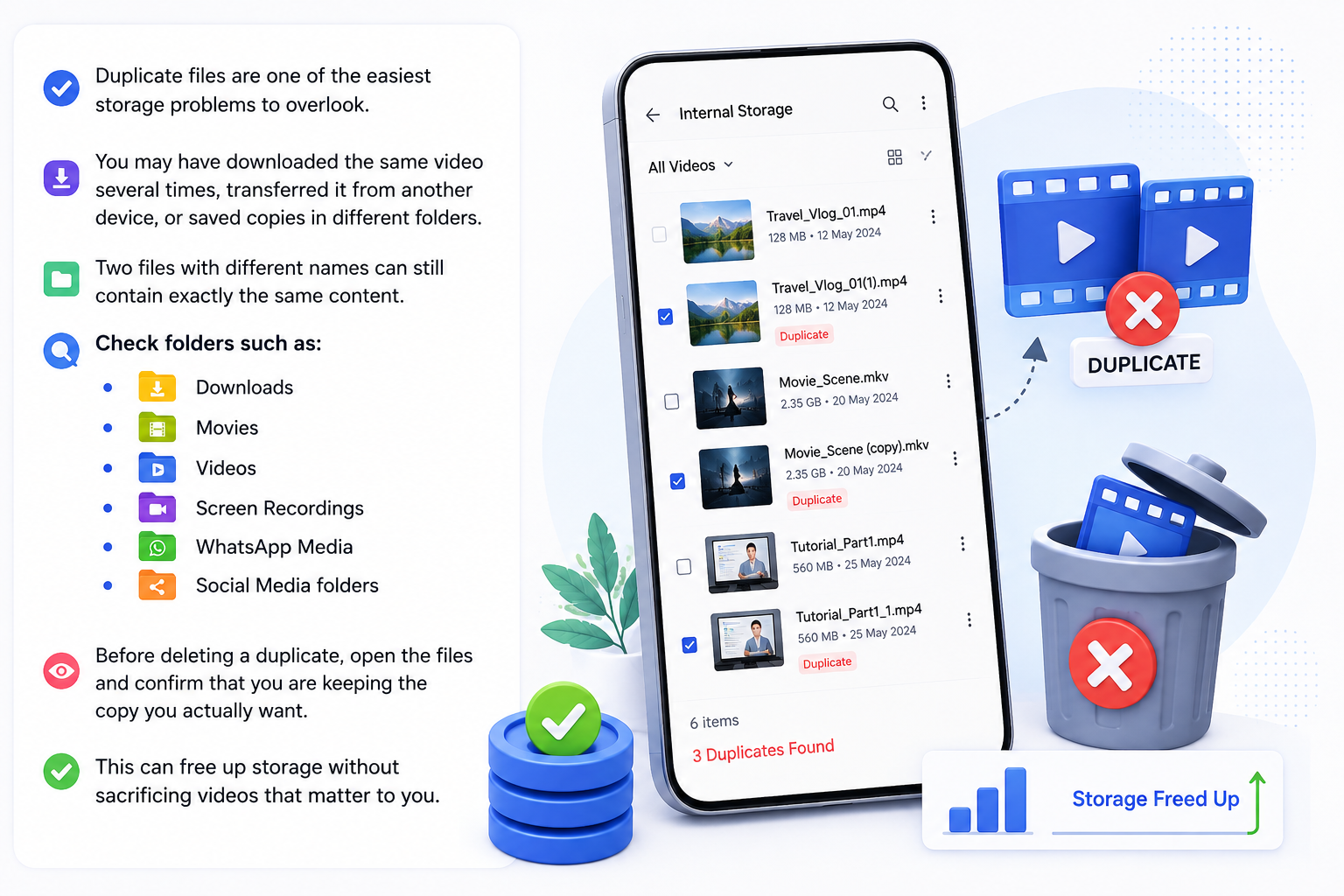
Free up valuable space on your Android device while keeping the videos you love.
Move Videos to Cloud Storage
I find that not every video needs to remain on your phone.
If you have videos that you rarely watch but still want to preserve cloud storage can be an alternative. You can upload selected files verify that they are safely stored and then remove the copies when you are comfortable doing so.
Cloud storage can be particularly useful for:
Family recordings
Travel videos
Large personal recordings
Tutorials you may need later
Archived entertainment files
Important media backups
TeraBox is one cloud-storage option that can be used to keep files online instead of filling your phones internal memory.
Just remember that cloud storage is not a substitute for a strategy, for extremely important files. For videos keeping another backup in a separate location is a sensible precaution.
Clean Your Downloads Folder Regularly
The Downloads folder can quietly become one of the sources of unnecessary files.
Over time you might find videos, images, documents, ZIP archives, installers and files that you downloaded once and completely forgot, about.
Spend a few minutes checking the folder and remove files you no longer need.
A useful habit is to ask yourself:
“If I haven’t opened this file for months do I really need it stored locally?”
If the answer is no you can. Remove it or move it somewhere appropriate for long-term storage.
Manage WhatsApp and Social Media Videos
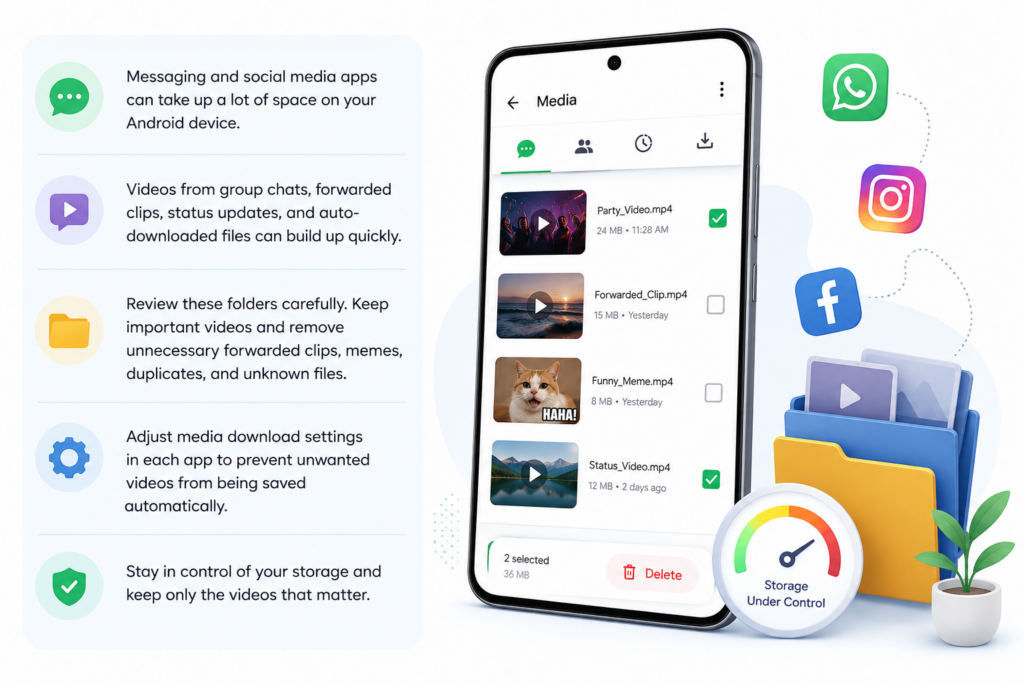
Manage WhatsApp and social media videos by reviewing downloaded clips, forwarded media, memes, duplicates, and unnecessary files. Remove unwanted videos and adjust auto-download settings to free up Android storage while keeping your important media safe.
Compress Videos When Necessary
Another option is video compression.
If a video is much larger than necessary but you still want to keep it on your device compression can reduce its file size. The amount of space saved depends on the resolution, format, bitrate and compression settings.
Keep in mind that aggressive compression can reduce image quality. For videos it is better to keep the original file somewhere safe and use a compressed copy for everyday viewing.
This approach gives you both:
A version for your phone
An original-quality version, for backup
Use an External Storage Device When Supported
Some Android phones support storage while others rely entirely on internal memory.
If your device supports a memory card or another external storage solution you may be able to move suitable videos away, from internal storage.
This can be useful when you have an offline collection.
However don’t move files without keeping another copy. External storage can also fail, become corrupted or get lost.
Clear Temporary Files Carefully
Your phone may hold files and cached data created by apps.Android gives tools to manage storage that can help find data that is not needed.Make sure you review what is being removed or clearing everything blindly.
Pay attention to:
Temporary downloads
Duplicate media
Unused application files
Old installation packages
Large cached content
Do not delete files when you do not know what they are. If a file looks important check it first.
Snaptube can help you manage downloads.
If you often download video content that Snaptube supports the download settings you choose can have an effect on how much storage you use. Downloading everything in the quality may sound like the best choice but it is not always practical. A long video at a resolution can take up a lot more storage, than a smaller version.
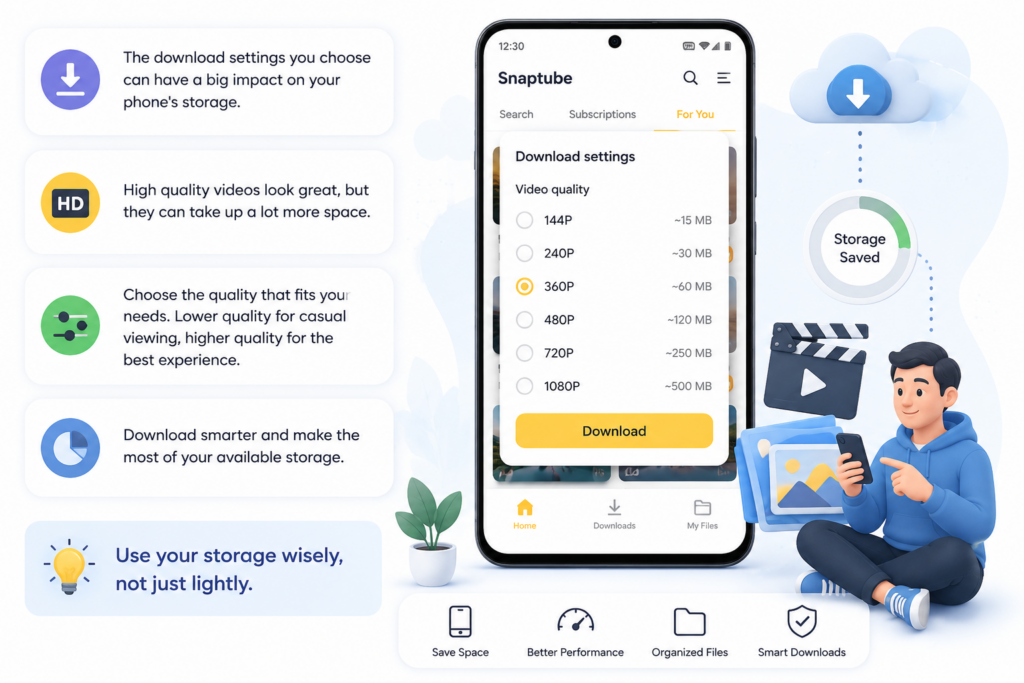
A smarter approach is to select the quality based on how you plan to use the file. For viewing on a phone a moderate resolution may be enough. For content where visual detail matters a higher resolution can make sense. This way you are not just downloading less; you are using your storage more wisely.
Final Thoughts
Freeing up Android storage does not mean you must abandon the videos that you love. With a bit of organization you can cut down storage use while you keep the content that matters.
Begin by spotting files and duplicate files. Pick video quality when you download new content. Delete media that is unnecessary from your messaging apps. Move videos to cloud storage or an external drive when it makes sense.
If you use a video downloader such as Snaptube, on a basis choosing video quality carefully can also keep your storage from filling up too fast.